
Project Details
Pixelflames
UI UX Design
The project involved designing a website for Pixelflames, a Dubai-based web and mobile app development agency, to establish credibility, showcase their services, and generate leads. I created a clean, modern, and professional interface that highlights their expertise, improves content clarity, and delivers a seamless user experience.
Live project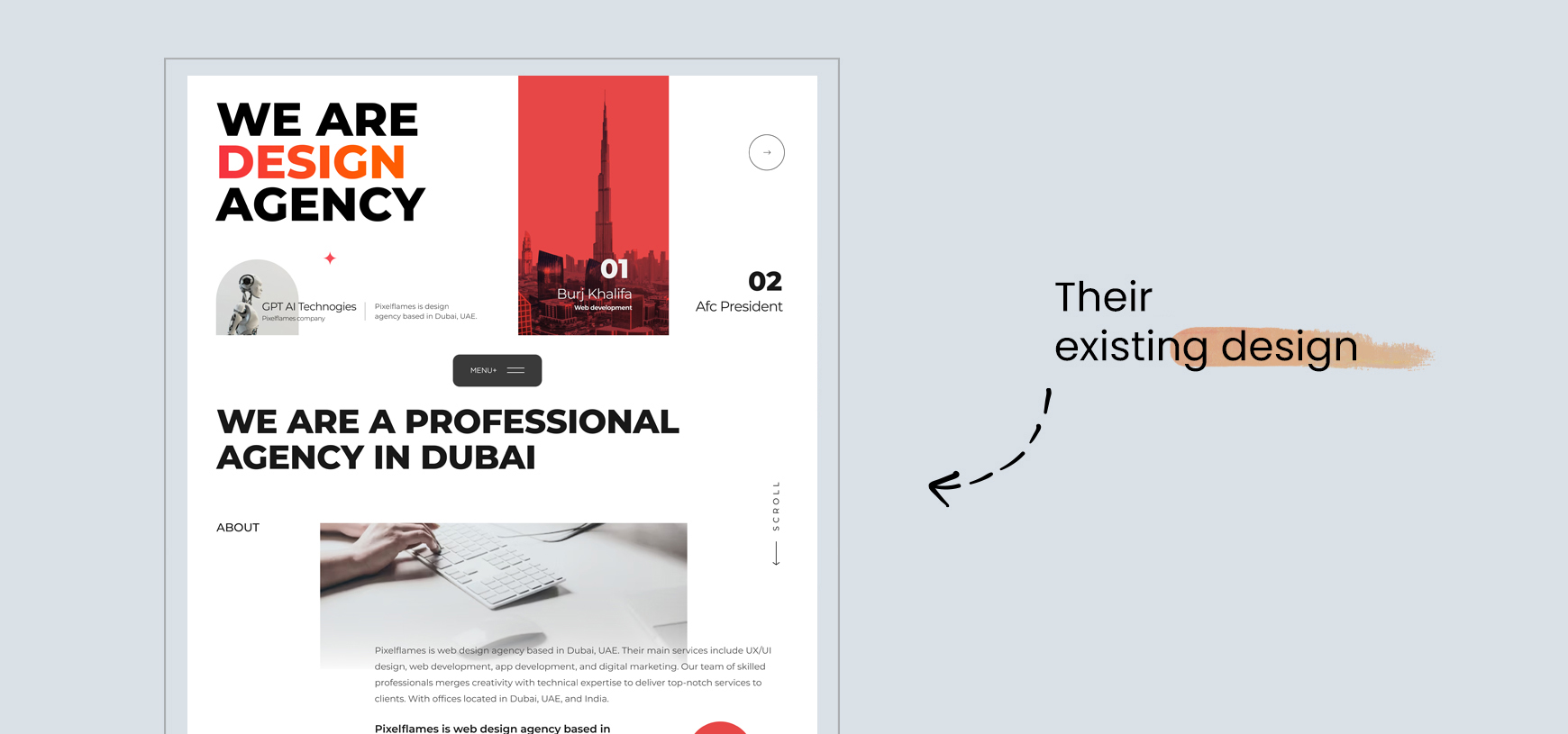
Key challenges
When approaching the Pixelflames website UI, several challenges became clear. The service hierarchy was unclear, making it difficult for potential clients to quickly understand the agency’s core strengths across mobile app development, web development, UI/UX, and AI. The overall visual identity lacked the professionalism needed to build trust, causing the site to feel generic rather than reflecting the agency’s technical expertise. Lead generation was also weak, with call-to-action buttons and inquiry forms not placed strategically to guide users toward contacting the team. Additionally, the website structure wasn’t scalable enough to support future growth in case studies, blogs, or service expansions. Finally, the mobile experience needed significant improvement, as many decision-makers browse on small screens and the current UI did not offer the speed, clarity, or responsiveness required for seamless navigation.
-
To address the UI challenges, a comprehensive design strategy was implemented. The website’s information architecture was simplified, with services organized into clear categories and dedicated pages for each offering. A professional visual identity was established using a refined color palette, clean typography, and high-quality imagery to reflect Pixelflames’ expertise. Lead generation was improved through prominent CTAs and an accessible contact form, guiding users toward inquiries. Scalable components were created within a design system to allow the site to grow smoothly with future case studies, blog posts, and portfolios. Finally, a mobile-first approach ensured fast, responsive, and intuitive interactions across all devices.
-
The Pixelflames website UI design followed a structured and user-centered approach. The process began with discovery to understand the business model, goals, and target users, and to define primary personas such as startups, enterprises, and AI-focused companies. Research provided insights into industry UI/UX patterns and visual inspiration. A clear information architecture and sitemap were created, and intuitive user flows were mapped for services, portfolio, and contact sections. Low-fidelity wireframes established layout, hierarchy, and CTA placement, which were then developed into high-fidelity designs with a cohesive design system incorporating colors, typography, buttons, and icons. Interactive prototypes were tested to validate navigation, usability, and mobile responsiveness. Finally, the design was handed off with detailed specifications, style guides, and all necessary assets for development.
-
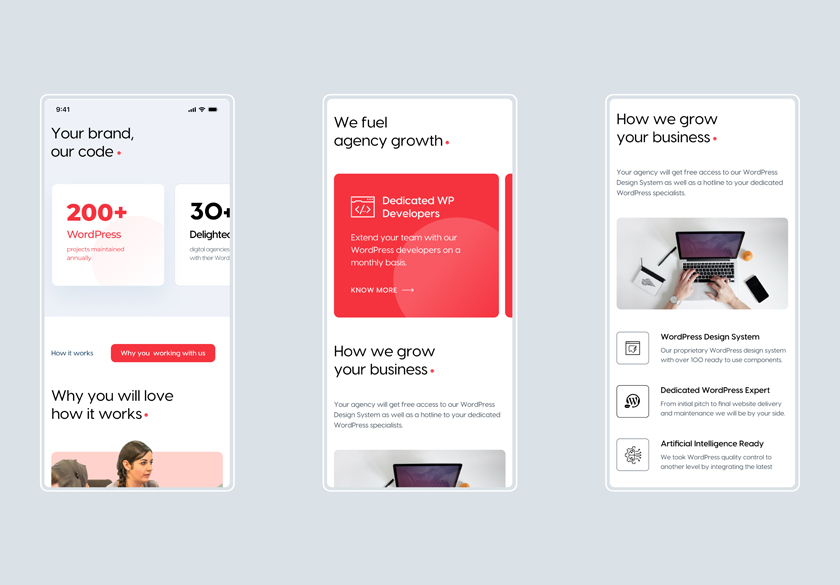
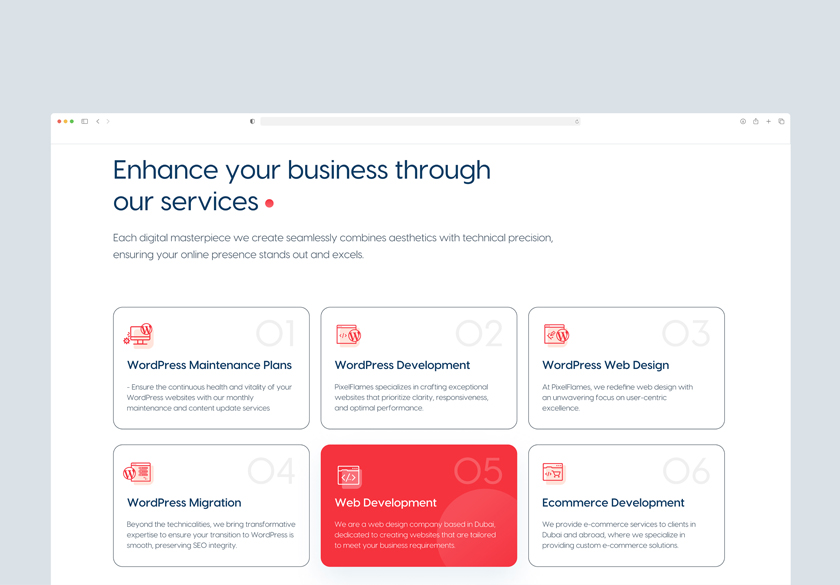
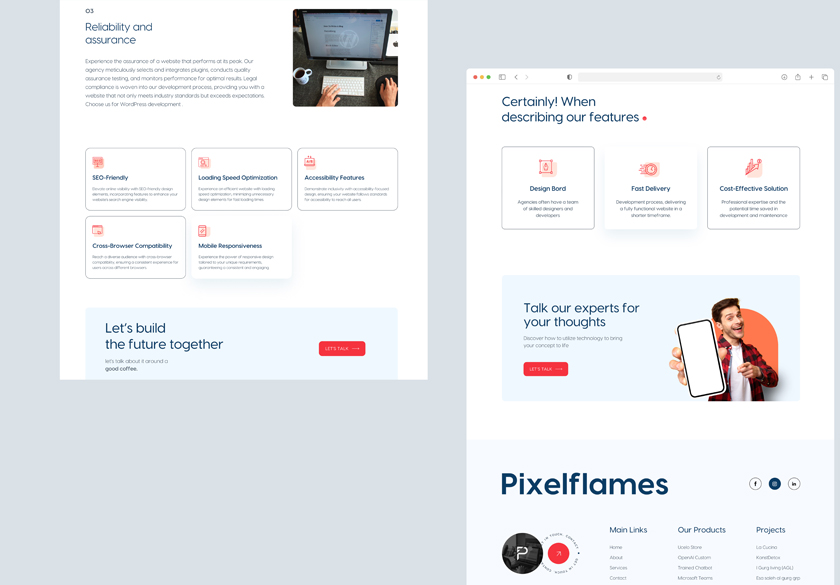
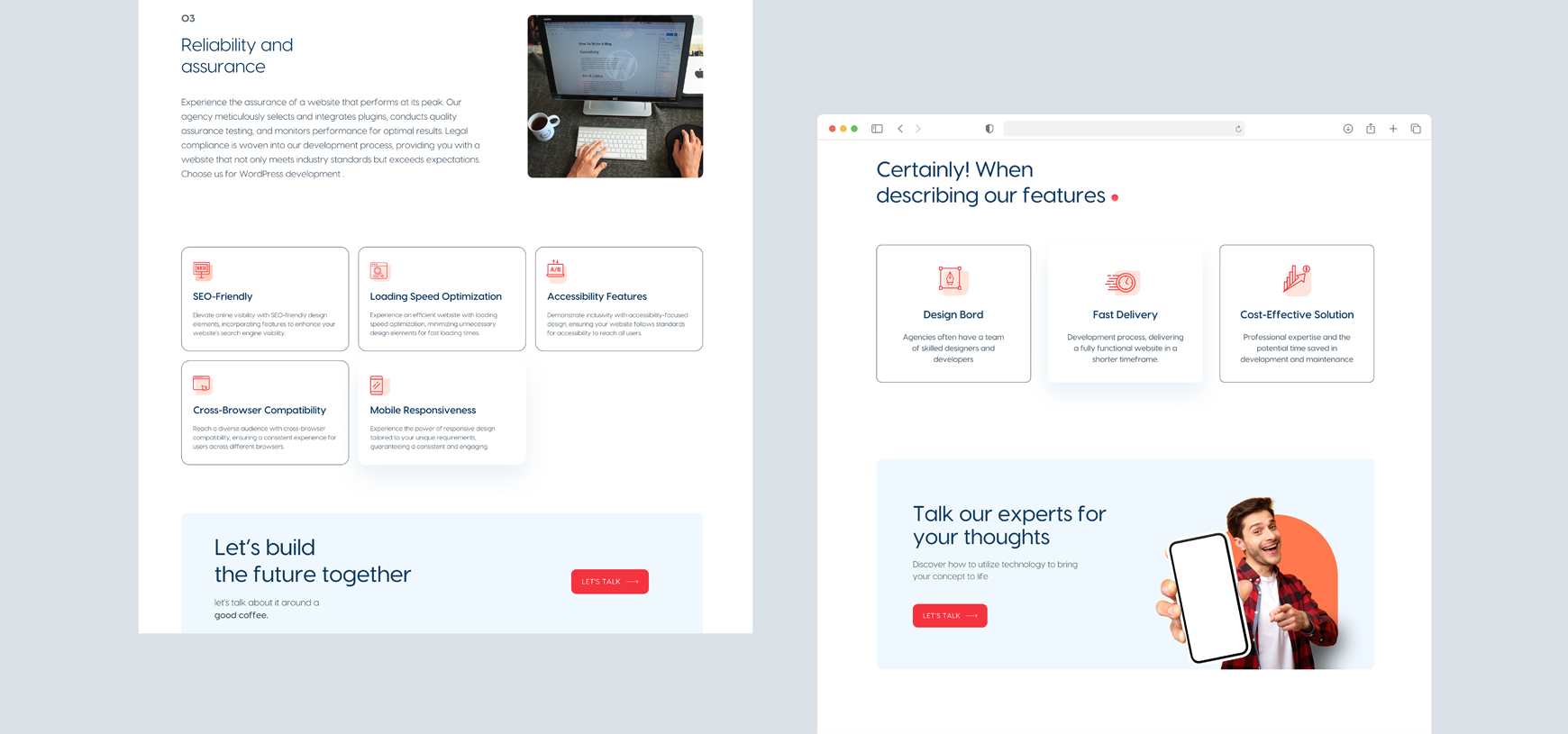
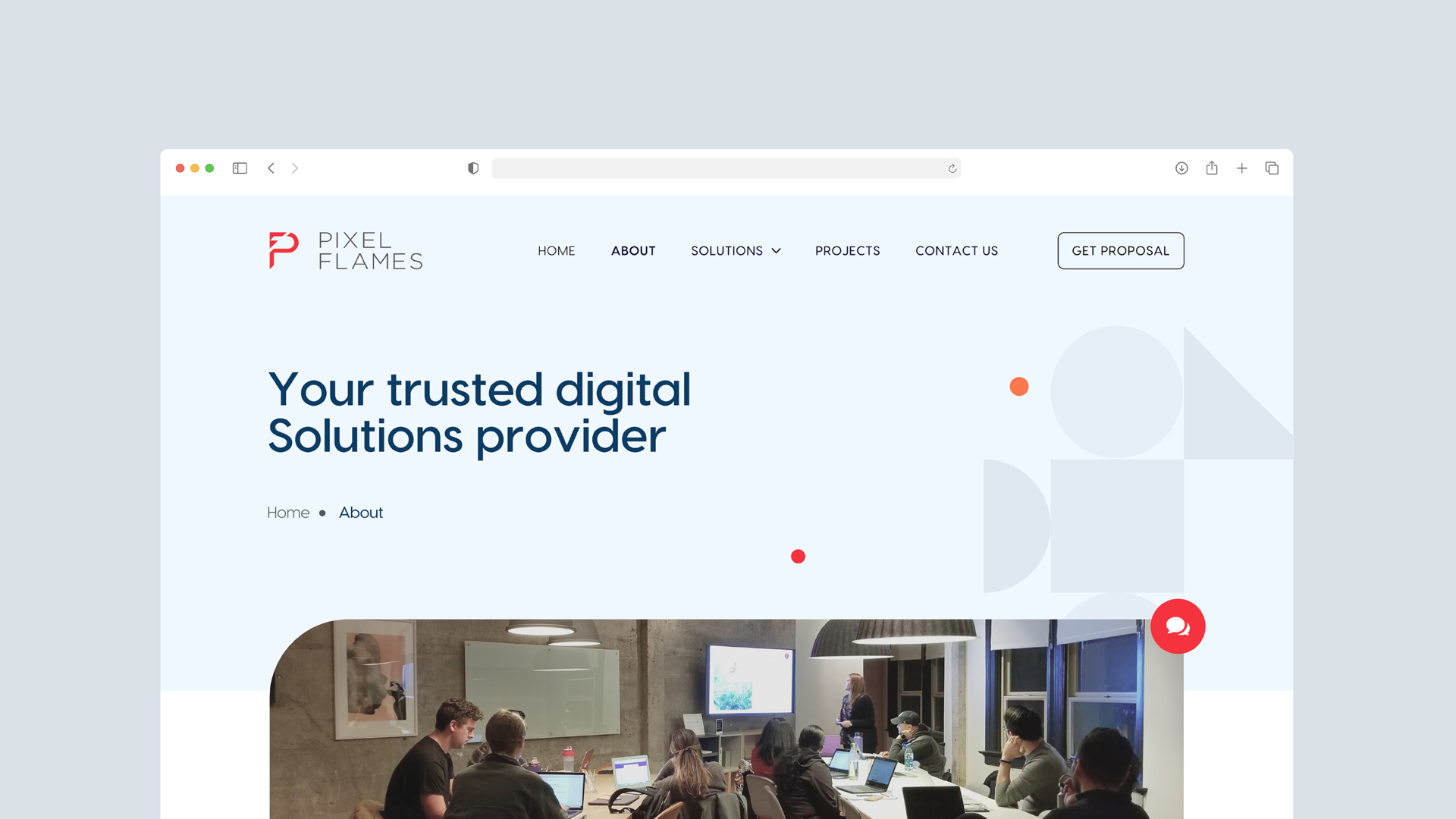
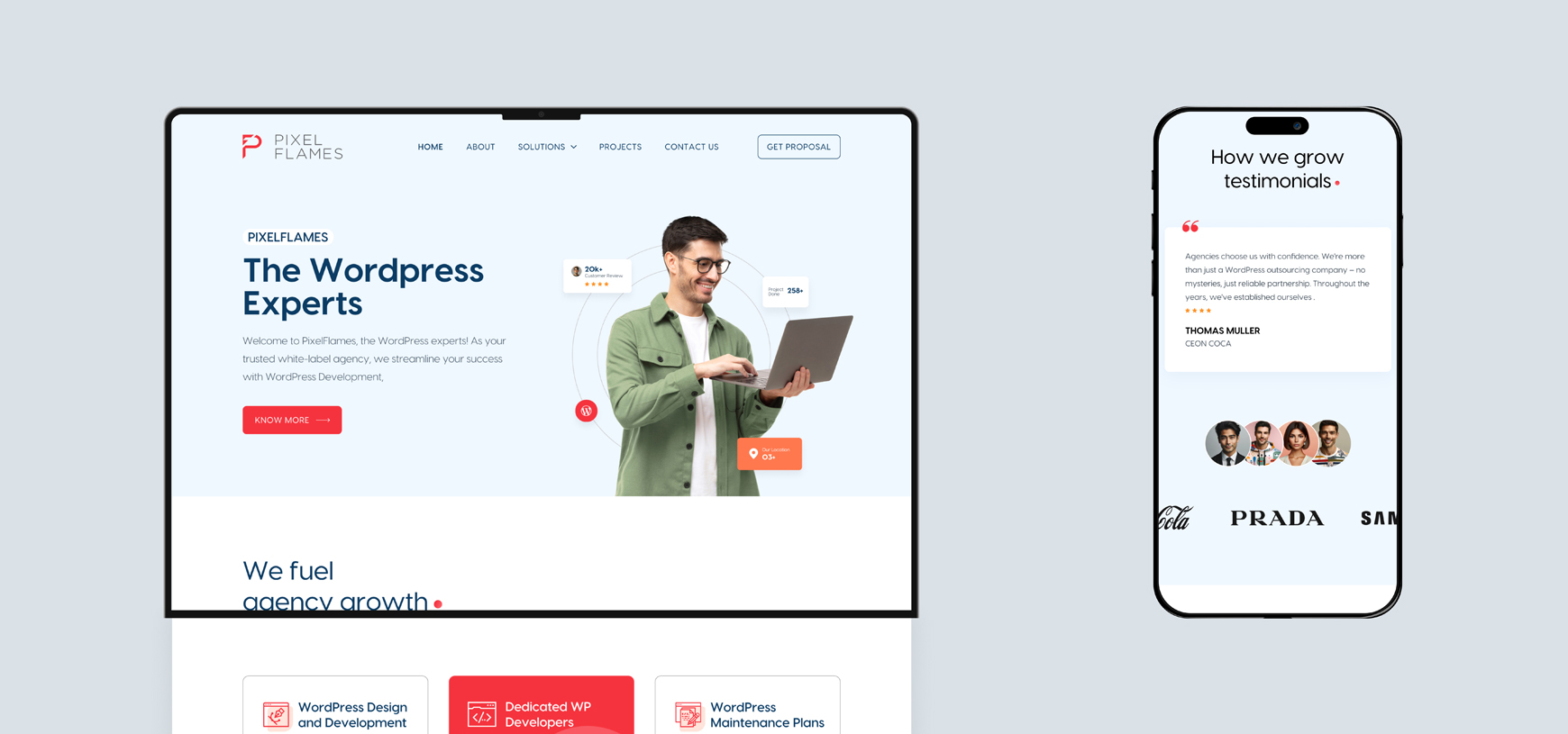
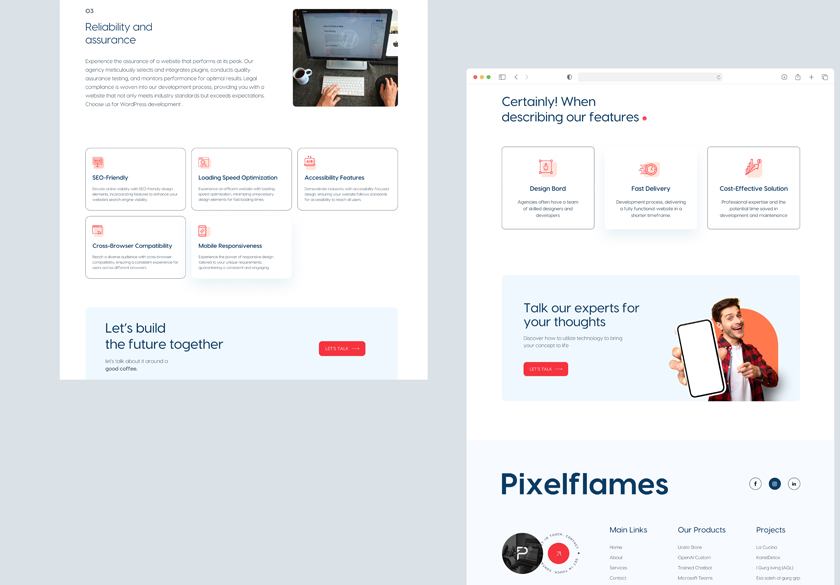
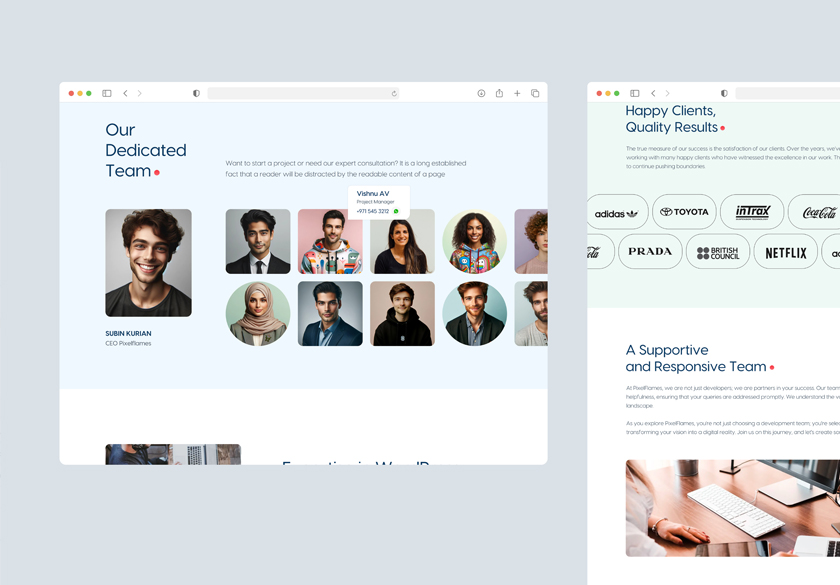
The final UI design for Pixelflames delivers a clean, modern, and user-friendly experience. The homepage features a bold hero section, clearly organized service categories, a featured portfolio, and a prominent “Get in Touch” call-to-action. Each service page uses card layouts and icons to break down offerings, complemented by sections explaining the process and value proposition. The portfolio showcases projects in a modular grid, with individual pages highlighting challenges, solutions, and visuals. An About section introduces the company and key team members, while the Contact page provides a simple form, essential details, and a strong CTA. All pages are fully responsive, with optimized mobile navigation and accessible interactions to ensure a seamless experience across devices.
Results & Impact
The redesigned Pixelflames website significantly improves both user experience and business outcomes. The updated UI strengthens brand credibility and professionalism, clearly positioning the agency as skilled and trustworthy. Optimized CTAs and a streamlined contact page enhance lead generation, while a clear presentation of services helps users quickly understand offerings, reducing bounce rates and increasing engagement. The design system ensures future scalability for adding case studies, blog posts, or additional services, while a responsive, mobile-friendly interface encourages high user interaction and effortless form submissions throughout the user journey.